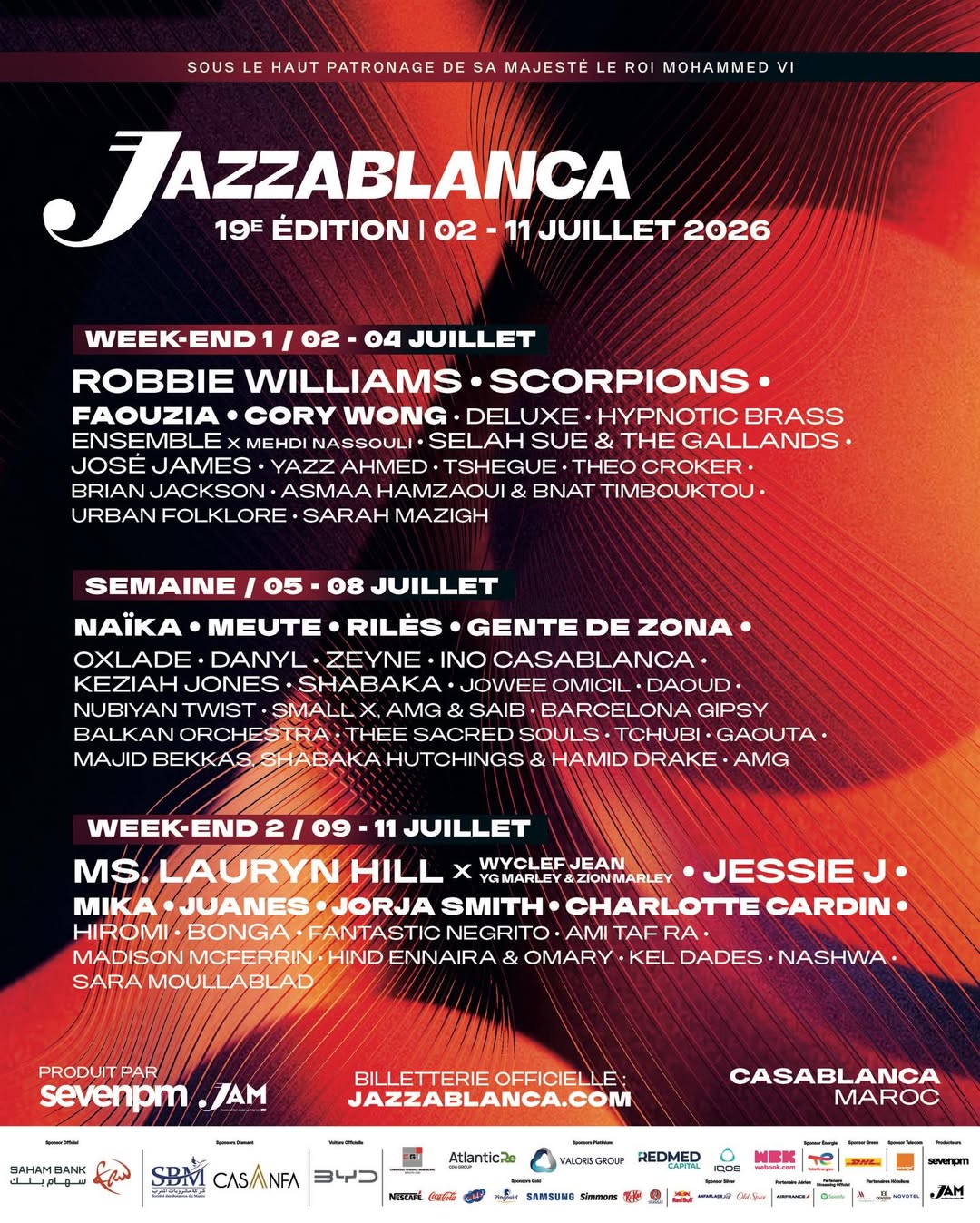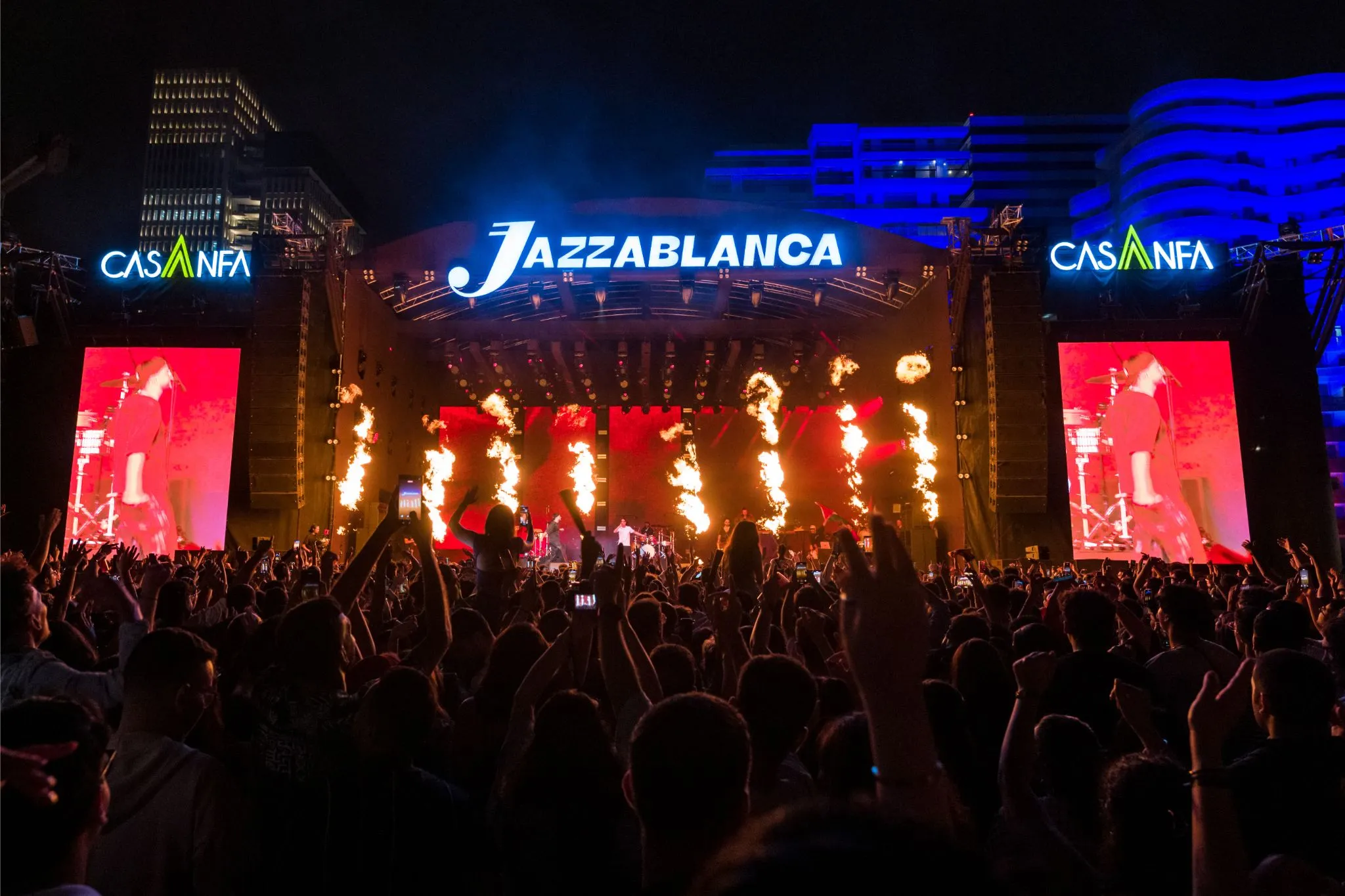
Every year, Jazzablanca raises expectations. Every year, the festival finds a way to exceed them. For its 19th edition, the Casablanca institution has unveiled a lineup that reflects both the festival's international ambition and its commitment to musical diversity. Across ten days, Anfa Park will welcome legendary rock bands, global pop stars, jazz innovators, Afro-fusion pioneers, electronic collectives, and some of the most exciting emerging voices from around the world. The message is clear: Jazzablanca isn't simply presenting concerts. It's curating a musical journey.
The opening weekend immediately sets the tone.
On July 2, global superstar Robbie Williams headlines a day that also features the explosive energy of Deluxe, the Afro-punk intensity of Tshegue, the innovative soundscapes of Yazz Ahmed, and the Moroccan gnawa roots of Asmaa Hamzaoui.
The following day continues the momentum with one of the most eclectic combinations of the festival. Moroccan-born international sensation Faouzia shares the bill with funk virtuoso Cory Wong, Belgian soul powerhouse Selah Sue, acclaimed jazz trumpeter Theo Croker, and Urban Folklore.
Then comes July 4, arguably one of the most anticipated nights of the entire festival. Rock legends Scorpions arrive in Casablanca alongside jazz icon Brian Jackson, while the unique collaboration between Hypnotic Brass Ensemble and Mehdi Nassouli promises to be one of the festival's most intriguing cross-cultural performances.
But Jazzablanca has never been a weekend-only experience.
The midweek programming demonstrates exactly why the festival has become one of the continent's most respected cultural gatherings. Artists such as Naïka, Keziah Jones, Oxlade, Meute, Nubiyan Twist, Gent de Zona, and Thee Sacred Souls ensure that audiences continue discovering new sounds long after the opening headlines have finished their sets.
Particularly exciting is the July 7 lineup, where audiences will witness collaborations that perfectly embody the spirit of Jazzablanca. From Small X, Saib, and AMG Quartet to the highly anticipated meeting between Majid Bekkas, Shabaka Hutchings, and Hamid Drake, the festival continues to position itself as a space where genres and generations collide.
Then comes the second weekend.
On July 9, Mika, Charlotte Cardin, Fantastic Negrito, and Hiromi bring together pop, soul, blues, and jazz in a lineup that feels tailor-made for Jazzablanca's eclectic audience.
But it is July 10 that could become one of the defining nights of the entire edition. The legendary Lauryn Hill arrives alongside Wyclef Jean, YG Marley, and Zion Marley, creating a rare family gathering rooted in hip-hop, reggae, and cultural legacy. Combined with performances from Juanes and other international artists, the evening already feels historic.
The festival closes on July 11 with a lineup worthy of a grand finale. Jessie J and Jorja Smith headline a day that balances mainstream star power with artistic depth, while Moroccan artists Hind Ennaira and Omary contribute a local touch to the closing celebrations.
Beyond the names themselves, what makes this lineup particularly compelling is its breadth. Jazzablanca continues to challenge the limits implied by its own name, embracing jazz, pop, rock, hip-hop, soul, Afrobeat, electronic music, reggae, Latin sounds, and experimental collaborations under a single banner.
Few festivals in the region operate on such a scale while maintaining such a strong curatorial identity.
With ten days, three stages, more than fifty artists, and a lineup that spans generations and continents, Jazzablanca 2026 is no longer simply a festival announcement. It's one of the year's most significant cultural events.
And judging by the names on this poster, Casablanca is about to have a very memorable summer.